PREFACE
"Horror game protagonist" is an aspirational curse forged by the first Fatal Frame game in 2001 and Depop's increase in popularity during 2020. Now, there are many fashionable people who go to resale sites and Chinatown boutiques in search of "horror game protagonist" outfits – typically, blouses with ribbons, miniskirts with ruffles, and the right kind of platform shoes for tripping on a loose floorboard and feeling like Cinderella. But there is no written doctrine for the act of dressing to die, so I am attempting to establish one in the following passages.
DEATH DRESS MANIFESTO
Let me first tell you I'm certain the modern "horror game protagonist" uniform originated in 2001, the same year developer Koei Tecmo released the first Fatal Frame game, and Konami gave Maria a butterfly tattoo on her skinny hip in Silent Hill 2. Though some people, like myself, have had the compulsive need to decorate themselves as angelic victims since at least The French Revolution—after the grisly Reign of Terror in 1794, women wore their hair in short coiffure a la victime, also known as the guillotine cut, with thin red ribbons around their neck like pigs left to bleed out.
Decades later, Maria is a wet nightmare, a poltergeist in a push-up bra, while Fatal Frame heroine Miku is a gentle clairvoyant—they seem at odds. The former is a witch, a perversion of main character James' wife Mary, while Miku is painfully devoted to her duties as a good sister, a respectful lady of the family home.
And yet they wear similar outfits. Both wear slimming, A-line miniskirts with cropped cardigans, a ribbon choker, and leather boots for kicking down mold-rotten doors and looking sexy. This is partly due to the idiosyncrasies of late '90s fashion; Maria, after all, is notoriously wearing a modified version of Christina Aguilera's red carpet look to the 1999 Teen Choice Awards. But it also encapsulates the kind of woman developers want these characters to appear as.
Thin, frail, fragile, cold, naked, ready to be scraped, prodded, tasted, photographed—not to be these things, necessarily, but to look like them. Maria's unmistakable hot pink cheetah print skirt and bare midriff beg you to think of her as the dirty girl who lingers at the gas station, and maybe she does do that, but she also knows more and better than James, rather than the stereotypical way around. Miku, meanwhile, appears to be grade-A jailbait until she, like Maria, makes her cleverness unmistakable and is the only person to leave Fatal Frame's haunted manor alive.
It is this friction—the sweet, salty contrast between how a woman looks and how she is—is why the horror game protagonist uniform has become an established practice in 2026. Kierkegaard of course explains in his own way that "the sensual is the momentary," and, "The true eternity in love, as in true morality, delivers it, therefore, first out of the sensual. But in order to produce this true eternity a determination of the will is called for."
27 years after Christina Aguilera walked the Teen Choice Awards red carpet, 25 years after the first Fatal Frame game, and, indeed, more than 100 years after some of the earliest accepted horror films such as The Cabinet of Dr. Caligari (1920) established the image of the stunning, see-through female heroine acting not at all as delicate as her nightgown… our slowly-changing minds are finally willing to assemble the uniform.
We can now plainly observe that women are not much more "free" in 2026 than Miku was in that defiled house. I loathe to say this, but I believe that horror is currently intrinsic to many people's experience of womanhood due to globally disproportionate rates of domestic and sexual violence, human trafficking, femicide, online abuse, the overturning of Roe v. Wade, the UK Supreme Court ruling against trans women, the one-in-five girls around the world who are married as child brides, and so on. These are atrocities. I do not think they can be cured with chiffon.
In any case, I have lived through some of these horrors and I know that Swan Lake sequins and bows can at least help. We deserve, in the ugly horror, to feel pretty. This is where the erotic tension of the horror game protagonist outfit becomes necessary. The world has made funny, broken things out of us, and it can only ever interpret what's girly as idiotic and crushable. But we, who have accepted the bruises, tears, and decided to breathe through them, know that femininity means resilience.
Do not dismiss me as a vulgar aesthete—even Kierkegaard's ethical side argues in Either/Or, "Woman is humble and trustful—who like a woman can cast the eyes down, but who like her can lift them up?" And I think something like that too, except about legwarmers instead of wandering, red eyeballs.
Therefore, I will provide sartorial details to define the generally accepted horror game protagonist outfit.
Helpfully, its basic components—top, bottom, shoes—have been recently refined in subsequent Fatal Frame games released between 2003 and 2014, as well as product descriptions on contemporary fashion resale sites with a high volume of Japanese imports, such as Depop, Poshmark, and Mercari. These tags include #horrorgameprotagonist, #fatalframe, #jfashion, #dolly, #lolita, and similar markers, which provocatively infantilize the notion of womanhood while associating it with disgustingly adult terror.
I am inspired to recite Goethe, translated by John Frederick Nims: "Nights of secrecy astir / Yet, I'd trade them, by the thousand / For a single night with her." To onlookers, the horror game protagonist is a blushing cherry blossom able to be undone with a single fingertip. To the protagonist herself, she is a bat whose sharp teeth are either coated in strawberry preserves or human blood. They are indistinguishable.
In any case, the uniform's requirements are typically as follows:
Top
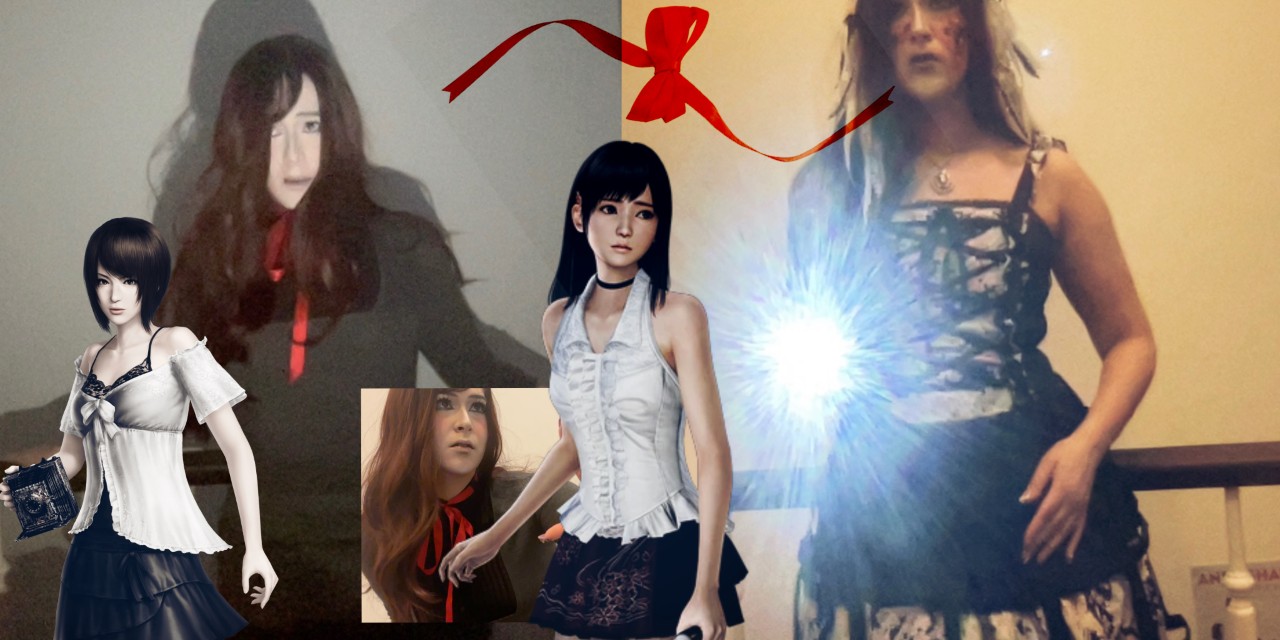
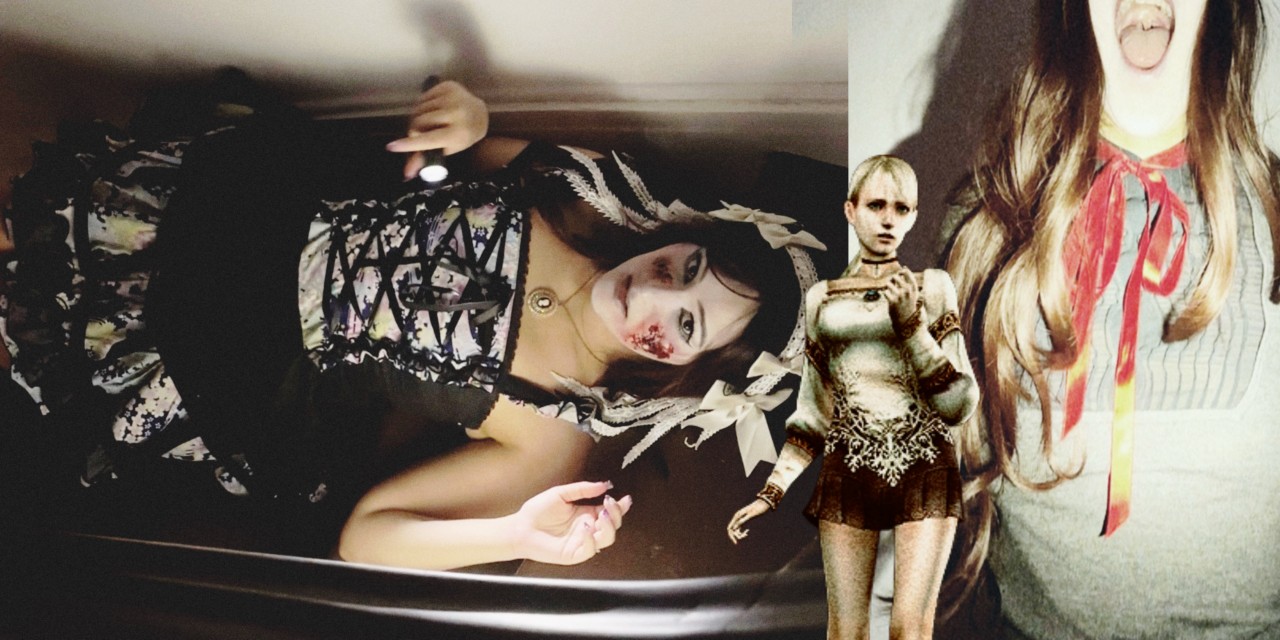
The horror game protagonist may wear a short dress evoking the romantic layers of the late 18th century chemise à la reine popularized by Marie Antoinette (see Ruka in Fatal Frame 4), or featuring an empire waist characteristic of 1960s Mod babydoll dresses. However, it's more common for a H.G.P. to wear shirts in the style of a French maid locked in her grotesque master's basement.
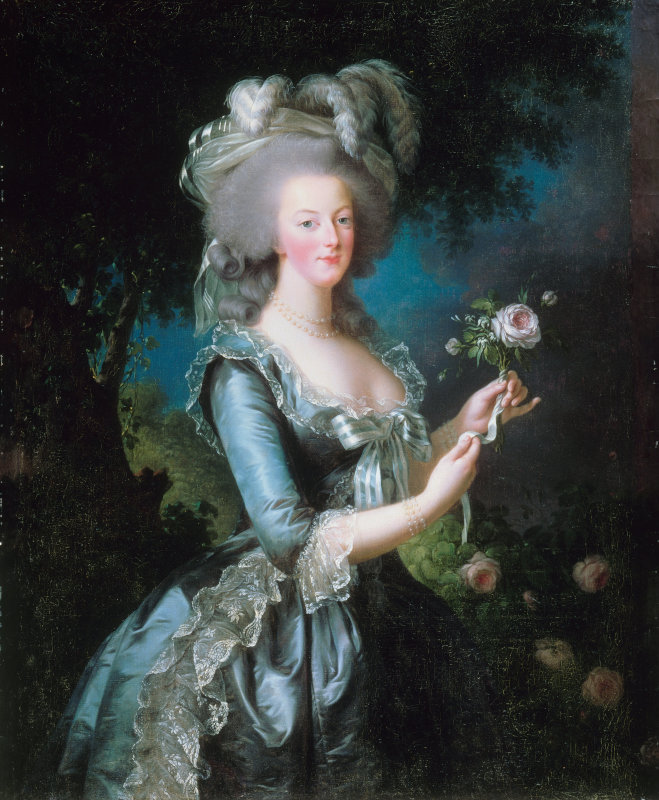

Shirts or blouses allow for more movement in the midsection, so that the protagonist can more easily stuff themselves into a cabinet like tinned mackerel when a wraith comes pushing down the hall, as well as for an easier outfit change if they start bleeding spontaneously from the womb. These shirts are typically made from thin cotton or skintight polyester. Ruching, ribbons, lace-up details reminiscent of corsetry, as well as Rococo ornamental beading are frequently seen on the clothing.
Bottom
The shorter the skirt, the closer to Hell. Skirts must be no longer than above the knee, and A-line cuts or pleated styles are ideal. Miniskirts or sukapan スカパン skorts may also feature tiered ruffles evocative of 19th century bloomers—a popular bifurcated garment, at the time, for outdoor activities like biking, or sprinting away from demonic possession.
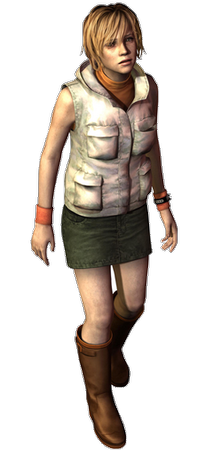
For fluffy skirts, polyester and similar light fabrics like chiffon or satin are ideal for achieving the texture of frothed milk, or seafoam tinged with blood. For more utilitarian styles, popularized by patron saint of rain boots and Silent Hill 3 protagonist Heather Mason, denim or sleek cargo is acceptable.
Shoes
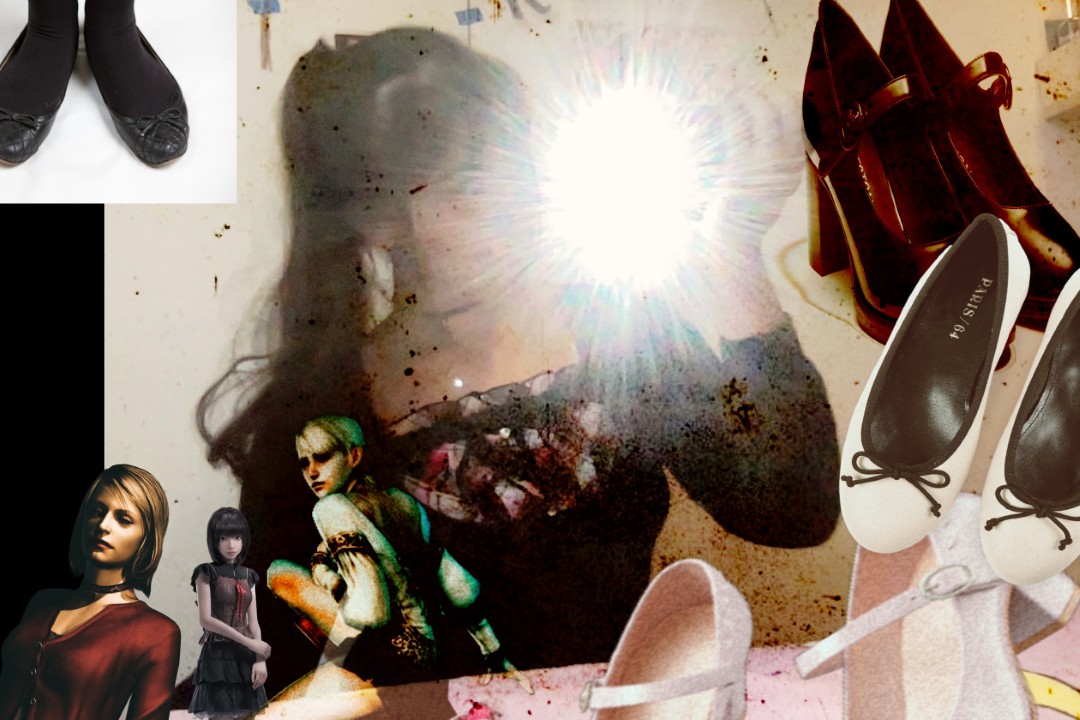
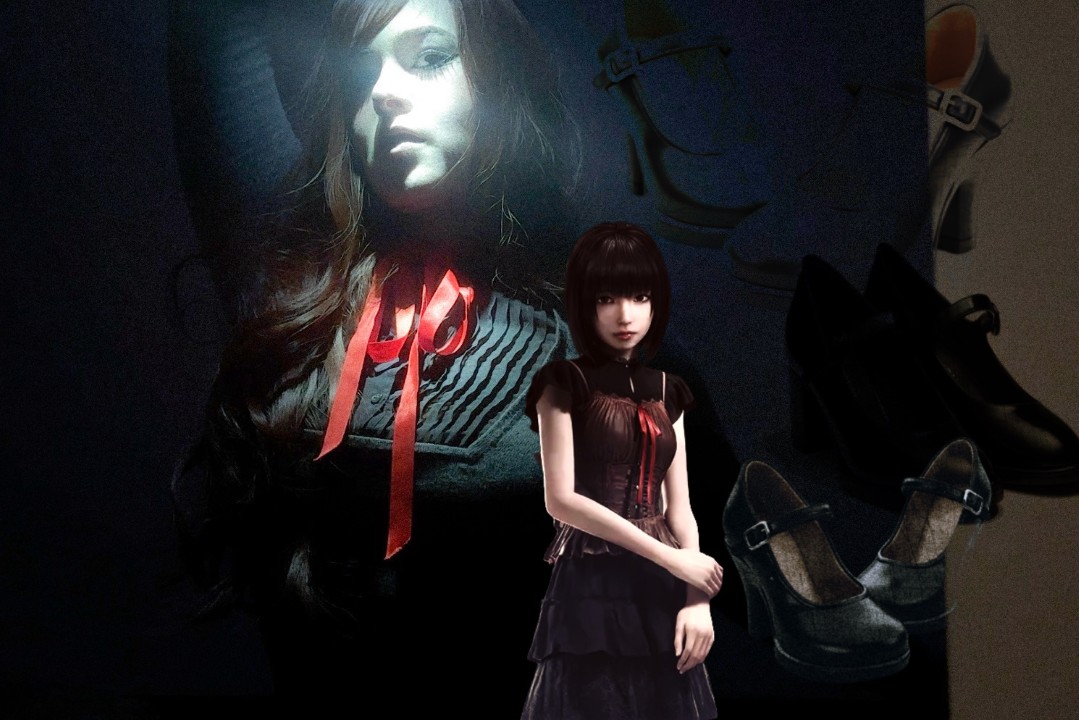
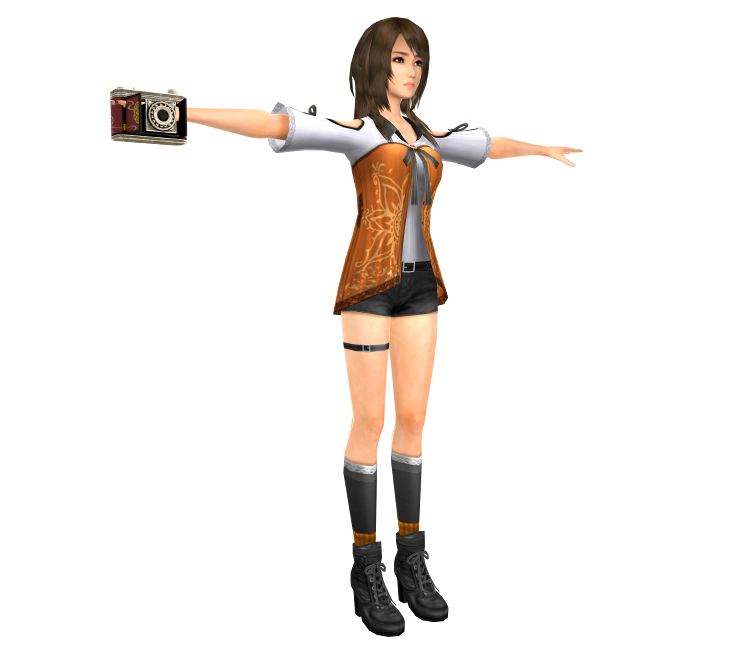
Leather, molded plastic, or rubber boots with bruised soles are the ideal footwear for a H.G.P. They carry connotations of open-minded spirituality—residue from the lace-up boots popular during the Spiritualist movement in the 19th century, as well as '60s counterculture, where women wore "space age" boots popularized by fashion masters Cristobal Balenciaga and his student André Courrèges. Over-the-calf boots—as worn by Fatal Frame: Maiden of Black Water (from 2014) Yuri with a thick, chocolate bar heel—are also useful across multiple types of terrain, including grass, rocks, vomit, so much blood, and seashells. If she is interested in more this kind of modest sensibility, the H.G.P. may also wear simple ballet flats or schoolgirl Mary Janes.
Misc.
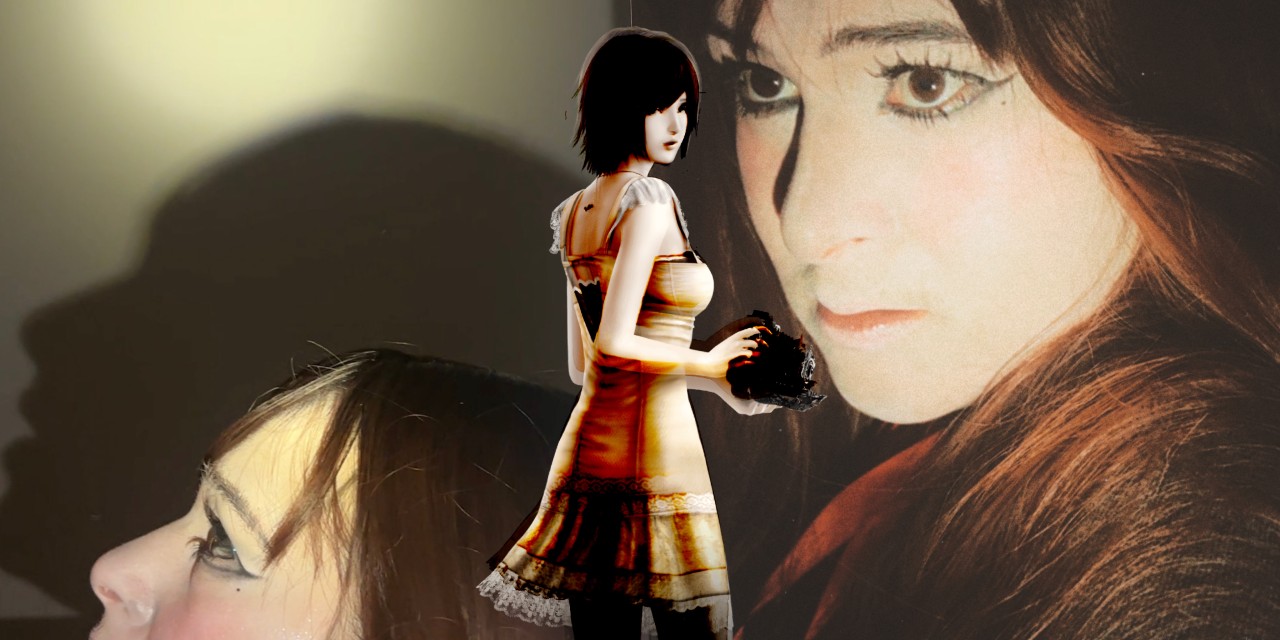
The average H.G.P. does not overly concern herself with accessories, as they are only another thing to worry about while attempting to develop something like a perfect parry, or self-worth. For this reason, H.G.P. accessories are often unobtrusive—no fascinator caps to lace and wilt around your head like gem lettuce, no sunglasses. A simple black ribbon choker, like the kind Fiona wears in Capcom's 2005 game Haunting Ground, or Miu in Maiden of Black Water, accentuate horror game protagonist fashion's overall commitment to romantic, gothic Victorian and opulent Rococo textures, and a bit of BDSM fetishwear.
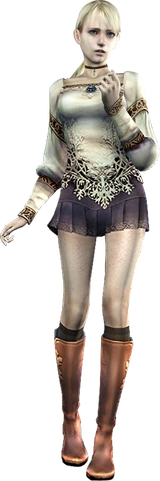
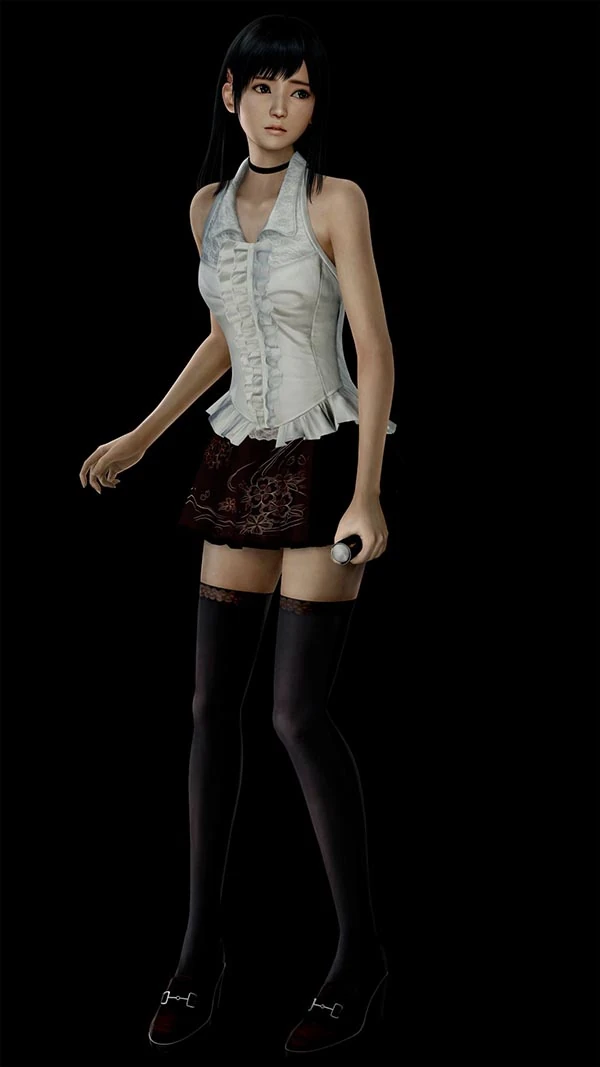
Horror game protagonist fashion, after all, is itself a type of fetishwear. We women take, reinterpret, and pray to the centuries of art that presents us as tender and edible, and therefore, sensitive to the supernatural and victimhood. This is the way male artists have written and painted us for centuries.
A nice example is the painting "The Incubus Leaving Two Young Women" by Swiss artist Henry Fuseli, c. 1794. The demon leaves on muscular horseback while the two women, barely covered in a cascade of white voile fabric, hold onto themselves as if trying to keep bubble bathwater from spilling out a hole. They were raped. And yet the woman nearest to the foreground reclines in a way that invites further investigation of her body, and the sprigs of strawberry blond curls pouring onto her pillow. She seems to retain a bit of control, in this way.
.jpg?mode=max)
Of course women would start to understand themselves in the same terms repeated to them, again and again. That's the cycle: man creates the conditions and the rules, then they enforce them—making it impossible to deny the conditions, and the rules. Man decides women are dolls in need of decapitation, they attack women, so women themselves eventually believe they are dolls in need of decapitation, and a Gothic nightgown.
"My wine hath run / Indeed out of my cup, and there is none / To gather up the bread of my repast," writes Elizabeth Barrett Browning. "Dear Christ ! when thy new vintage fills my cup, / This hand shall shake no more, nor that wine spill." We take the slick hand of death, which follows us, and try to trust it.
"Because I could not stop for Death –" Emily Dickinson says, "He kindly stopped for me – / The Carriage held but just Ourselves – / And Immortality." Death blooming on a clean blouse, falling like raindrops onto a new pair of Mary Janes. If we do not condone it, then it only happens to us. We choose victimhood to find agency in inevitability, and turn it to art. Transform it, like a fairy godmother, into fashion.
"Dying / Is an art, like everything else. / I do it exceptionally well. / I do it so it feels like hell. / I do it so it feels real"—Sylvia Plath. I will not insult you and pretend any of this fully satisfies me. I both abhor and worship my victimhood, it's an embarrassing baby blanket and my indulgent reason for being. It is also the caramel center of horror game protagonist fashion. Victimhood is sticky, delectable, and bad for your organs.
For the sake of H.G.P. fashion practitioner's safety, then, I have created the following rules:
- Tie your ribbons tight, so that you don't trip
- Do not laugh at another H.G.P. if she trips
- Forgive the entity that turned you into a H.G.P.
- Never return to it
Subscribe